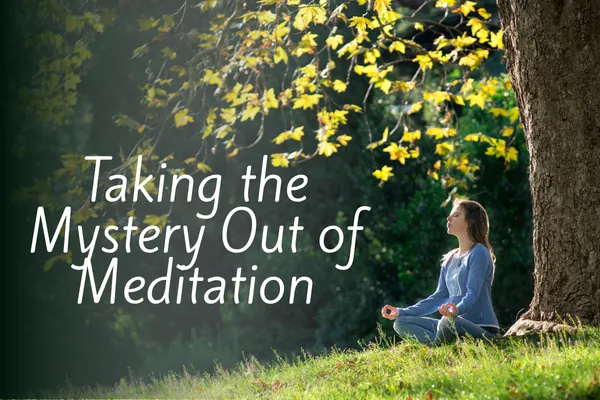
Taking the Mystery Out of Meditation
Alright, let’s talk about meditation. You’ve probably seen those images of monks sitting cross-legged on mountaintops, eyes closed, looking like they’ve discovered all the secrets of the universe. But let’s be honest—most of us aren’t anywhere near a mountaintop. We’re sitting at desks, buried in emails, running from meeting to meeting, or trying to squeeze some kind of life into what’s left of our day.
But what if we could strip away the mystique and make meditation not just accessible, but actually enjoyable—and something that fits into our busy schedule? That's precisely what we're going to explore today. Whether you’re too busy, curious but clueless, or have tried and given up, we’re going to show you how to make meditation work for you – no mountaintop required.
Why Meditation?
So why even bother with meditation? Because it’s one of the simplest, most effective ways to clear mental clutter, calm a racing mind, and sharpen focus when life feels relentless. I’ve been meditating for nearly two decades, and it’s done wonders for me. It’s helped me lower stress, think more clearly, and keep my cool when things get hectic or unpredictable.
Meditation has become my go-to method for building a stronger, healthier mindset—and transforming how I approach work, relationships, and life in general. And that’s exactly what I want to share with you.
Who Is This For?
If your mind doesn’t have an “off” switch, this is for you.
If you’re too busy to even think about meditating, I’ve got you.
If you’re curious but have no idea where to start, I’m here to guide you.
And if you’ve tried it before but gave up because sitting still felt pointless or uncomfortable, you’re definitely in the right place.
We’re about to make meditation simple, engaging, and—dare I say—something you’ll actually look forward to. And trust me, if I can do it, anyone can.
My Journey with Meditation
When I first started meditating, I remember struggling to sit still for even ten minutes. I'd be checking the clock, feeling restless, and wondering if I was doing it right. When I was done, I would be like “whew, made it through the whole 10 minutes!” Fast forward almost twenty years, and I now enjoy two 30-minute guided sessions daily. But it wasn't an overnight transformation. It took experimenting with different lengths, frequencies, and techniques to find what worked best for me. Even after all these years, I much prefer guided meditation.
The Benefits of Guided Meditation
Let’s dig a bit deeper into the benefits of guided meditation. Unlike traditional meditation, where you might sit in silence and focus on your breath, guided meditation involves following along with a guide, usually set to a backdrop of music or natural sounds. This method can be particularly helpful for beginners or those who find it difficult to meditate on their own. Here are some benefits:
Structure and Guidance: Guided meditations provide a clear structure, making it easier to follow along and stay focused.
Reduced Mental Chatter: The guidance helps reduce mental chatter, allowing you to relax and enter a meditative state more easily.
Address Specific Issues: As mentioned earlier, guided meditations can target specific issues like stress or negative thinking patterns.
Engaging Experience: The combination of voice and music makes the experience more engaging, reducing the likelihood of boredom or restlessness.
Making Meditation Accessible
Let’s face it, many of us have neither the time nor the inclination to meditate in silence for hours at a time, seeking some sort of spiritual awakening. If you do, I salute you. Truly! But if you don’t, that’s okay. We can still get a lot out of our meditation practice. That's why we’ll be doing guided meditations around ten minutes long. It’s short enough that we can squeeze it into our busy days, but long enough to have an impact. As you get more comfortable with your practice, you can gradually extend these sessions. I typically do two, 30-minute sessions a day.
Engaging and Interesting Meditation
My goal is to make meditation more interesting, so that we are more inclined to practice it. One of the key elements of my guided meditations is the use of music that's more compelling and engaging than the typical "spa" music associated with meditation and yoga. The guided portion is interwoven into the music, creating a captivating soundscape designed to keep your attention and provide a strong focal point for your meditation. This approach is especially beneficial for those who find it challenging to sit in silence and focus on their breath.
Addressing Specific Mindset Issues
I’m particularly passionate about crafting guided meditations that tackle specific mindset-related issues like self-defeating beliefs, negative self-talk, and low self-worth. This process of managing mindset through meditation is the foundation of my practice, and it’s something I want to share with you.
For busy professionals, these challenges often show up in subtle ways—like perfectionism, overthinking every decision, or constant pressure to perform. Meditation gives us a chance to step out of that mental loop, hit reset, and reconnect with a calmer, more grounded state of mind.
The goal isn’t to switch off the mind, but to engage it in a way that promotes positivity, emotional well-being, and stress relief. But it won’t be all business. We’ll also branch out into other areas of meditation to keep it fresh—and actually have some fun with it. It may be considered untraditional in most meditation circles, but who ever said meditation wasn’t allowed to be fun?
Meditation Isn't About Perfection
It’s important to remember that meditation isn’t about achieving perfection. It’s about showing up, being present, and giving yourself a break from the constant chatter of daily life. Some days will be easier than others, and that’s okay. What matters is that you keep coming back to your practice, even if it’s just for that ten minutes a day.
Getting Started with Your Practice
So, how do we get started? Here are some tips to kick off your meditation journey:
Find a Comfortable Space: Choose a quiet spot where you won’t be disturbed. It doesn’t need to be fancy. A corner of your living room will do nicely.
Keep an Open Mind: Be open and willing to try something new as you follow along with the guided meditations.
Be Patient With Yourself: Don’t worry if your mind wanders. It happens to everyone! Gently bring your focus back as many times as you need to.
There’s really not much more to it. You will receive most of the instructions during each session, as they may vary slightly from session to session.
Common Misconceptions About Meditation
Let’s address some common misconceptions that might be holding you back from starting a meditation practice:
“I don’t have time to meditate.” You don’t need hours to benefit from meditation. Ten minutes a day can make a significant difference.
“I can’t stop my thoughts.” The goal of meditation isn’t to stop thinking. This impossible. The idea is to realize when your mind has wandered off and learn to gently guide your focus back to the present moment.
“Meditation is only for spiritual people.” While meditation has spiritual roots, it’s also a practical tool for managing stress, improving focus, and enhancing overall well-being.
Creating a Routine
To make meditation a regular part of your life, it’s helpful to create a routine. Try to meditate at the same time each day, whether it’s in the morning to set a positive tone for the day, during lunch to take a break, or in the evening to unwind. Consistency is key, so find a time that works best for you and stick to it. Having said that, meditating is better than not meditating. So, if you miss your usual morning session, go ahead and meditate whenever you can squeeze it in.
Wrapping Up
Meditation doesn’t have to be a daunting or mystical practice. By making it accessible, relevant, and engaging, we can incorporate it into our daily lives and enjoy its numerous benefits. Remember, the goal isn’t to achieve perfection but to develop a habit that supports our mental and emotional well-being. Whether you’re a busy professional, a curious beginner, or someone who’s tried meditation but found it challenging, there’s a place for you in this journey.
If short, guided meditations are something you want to try or reintroduce back into your life, this is a great place to start! Our guided meditations on the Workforce Nation: Meditation for Work-Life Harmony YouTube channel (here) and podcast (below) are designed for exactly that — no experience needed.